


If you've spent any time researching facial rejuvenation surgery, the terminology can get confusing quickly. Both the composite facelift and the deep plane facelift are advanced techniques that work well below the skin, repositioning deeper facial tissues. They differ in the anatomical layers they target and the outcomes they produce.
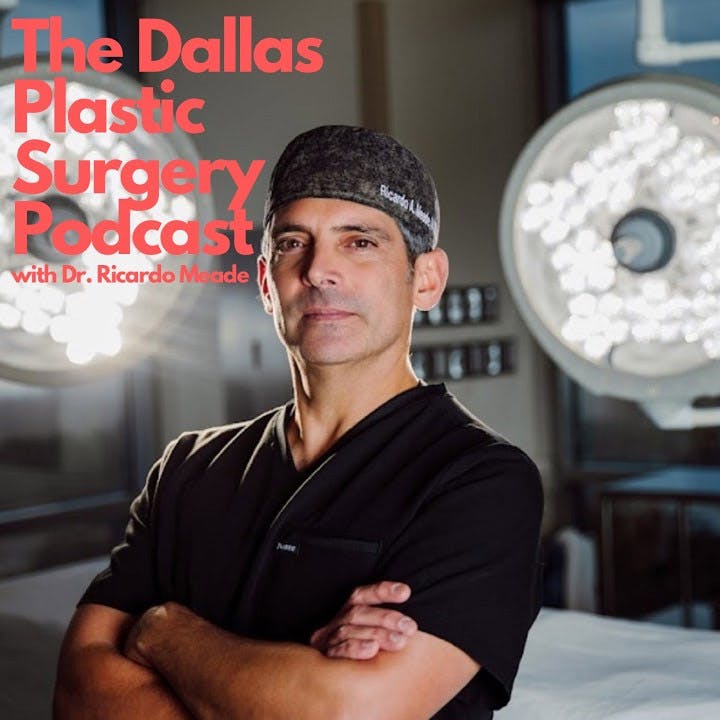
Dr. Ricardo A. Meade, a board-certified, fellowship-trained plastic surgeon at Meade Aesthetic Surgery in Dallas, performs both procedures. Of the two, the composite facelift is the technique he has found to deliver the most comprehensive and longest-lasting results. Read on to see how they compare, and which approach may be right for your anatomy.
Two Techniques, Two Anatomical Approaches
Both procedures operate at the level of the SMAS (superficial musculoaponeurotic system), a layer of muscle and connective tissue beneath the skin, but they diverge significantly from there. The key differences come down to several defining factors:
- Direction of lift: The composite facelift lifts tissue upward, toward the eye. The deep plane facelift pulls at a diagonal, upward and toward the ear.
- Layers involved: The composite lift moves the skin, the underlying muscle layer, and the muscle around the eye together as one unit. The deep plane lift works at a deeper level, releasing the ligaments that anchor facial tissue to the bone.
- Areas addressed: The composite facelift targets the cheeks, midface, jawline, and lower eyelid area. The deep plane facelift focuses on the lower face, including the jaw, jowls, and deep smile lines.
- Under-eye area: The composite lift is the only technique that improves the area where the lower eyelid meets the cheek, making it an important consideration for patients whose aging shows most around the eyes.
What the Composite Facelift Accomplishes
A true composite facelift requires moving the orbicularis oculi muscle and the cheek fat pads together as a single, continuous flap. It's an approach so technically demanding that very few surgeons are trained to perform it.
Dr. Meade completed his fellowship under surgeons who pioneered these advanced techniques, which is why the composite facelift has become a cornerstone of his Dallas practice. By lifting the cheek vertically toward the eye rather than laterally toward the ear, the procedure returns the cheek fat to a more anatomically correct position, blending it back into the lower eyelid the way it once appeared. This upward direction of pull also eliminates the need for temple incisions or high sideburn scars. The improvement spans the midface, lower eyelids, and jawline together, producing results that look natural and cohesive.
What the Deep Plane Facelift Accomplishes
The deep plane facelift operates below the SMAS layer to release the retaining ligaments that hold facial tissue in place. By working at this depth, the procedure repositions tissue at its source, which is why results avoid the "overdone" look associated with older facelift techniques.
At Meade Aesthetic Surgery, this approach is particularly well-suited to patients with pronounced nasolabial folds, significant jowling, and lower face sagging. Because the skin and muscle layers remain connected throughout the lift, results are durable and natural-looking.
Choosing the Right Approach for Your Anatomy
The right approach depends on where aging is most concentrated. During a consultation, Dr. Meade evaluates bone structure, skin quality, and tissue position before making a recommendation.
Good candidates for a composite facelift often notice:
- Cheeks that have lost volume or dropped over time
- A hollowed or sunken look beneath the eyes
- Eyes that look heavy, tired, or older than they feel
A deep plane facelift tends to be a better fit for patients bothered by:
- Deep lines running from the nose to the corners of the mouth
- Sagging or jowling along the jawline and lower face
- Little to no aging around the eye area
See What's Possible With Dr. Ricardo A. Meade, MD
Few surgeons in Dallas have the training required to perform both procedures at this level. With a fellowship grounded in these advanced techniques and over two decades of surgical experience, Dr. Meade's work is defined by results that look natural and hold. Schedule a consultation at Meade Aesthetic Surgery to find out which approach fits your face.
This information is provided for educational purposes only and does not replace a consultation with a board-certified plastic surgeon. Outcomes, risks, and suitability vary from patient to patient.