


A tight, defined jawline depends on more than the skin covering the neck. When visible vertical neck bands or deep fat beneath the muscle are the real problem, surface-level skin tightening or standard liposuction alone typically will not fix it, and the bands often return within months.
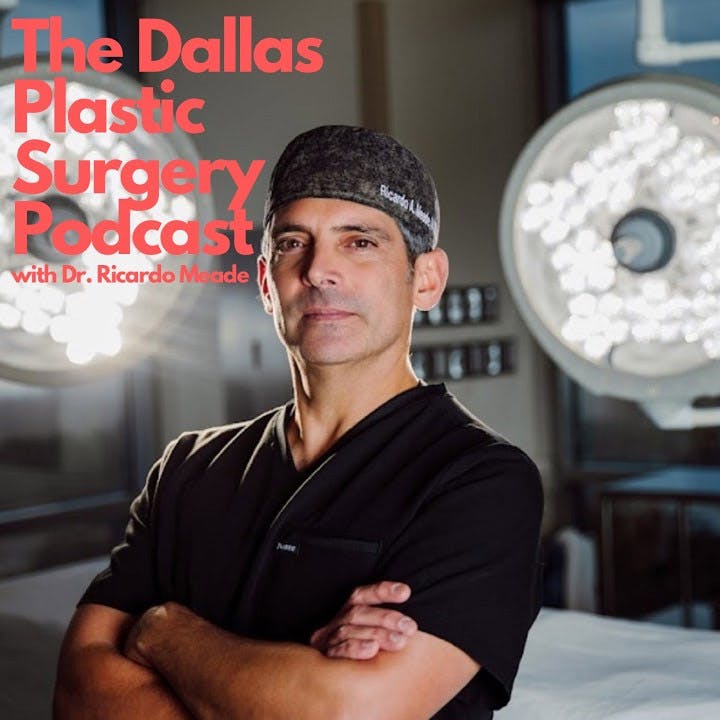
Dr. Ricardo A. Meade, a board-certified plastic surgeon at Meade Aesthetic Surgery in Dallas, TX, evaluates whether a patient's neck concerns come from loose skin, separated neck muscle, deep fat, or a combination before recommending a neck lift or a deeper approach involving submental lipoplasty and platysmaplasty.
This blog compares a direct neck lift with deep neck contouring for patients considering neck rejuvenation in Dallas and explains when platysmal bands require more than a surface fix.
What Are Platysmal Bands, and Why Do They Form?
Platysmal bands are the vertical cords that appear down the front of the neck when the paired platysma muscles separate at the midline and lose their youthful tension. They become more visible with age, weight changes, and loss of muscle tone, and they tend to stand out more in certain head positions or when the neck muscles are engaged.
Common signs that platysmal banding, rather than skin laxity alone, is driving a patient's concerns include:
- Vertical cords that are more visible when smiling, talking, or tensing the neck
- A neck profile that still looks loose or undefined, even at a healthy weight
- Fullness beneath the chin that persists despite diet and exercise
- A jawline that appears blurred from the side, even when skin elasticity is otherwise good
What Is a Direct Neck Lift?
A direct neck lift primarily addresses loose or excess neck skin by removing it and re-draping the remaining skin over the underlying structures. It works well for patients whose main concern is sagging skin rather than separated muscle bands or deep fat accumulation.
Dr. Meade recommends a direct neck lift when the skin envelope itself is the primary issue, and the platysma muscle beneath it remains reasonably intact.
What Is Deep Neck Contouring with Submental Lipoplasty and Platysmaplasty?
Deep neck contouring combines submental lipoplasty, which removes fat from the area above and below the platysma muscle, with platysmaplasty, which repairs and tightens the separated muscle bands, usually through a small incision beneath the chin.
According to a clinical review published by the National Library of Medicine's StatPearls resource, today's standard approach to submental and anterior neck rejuvenation is some variation of a "corset" platysmaplasty combined with suction-assisted lipectomy performed both above and below the platysma muscle.
Addressing the muscle layer directly, rather than only the skin or fat above it, is what allows this approach to correct visible bands rather than simply masking them.
When Does Surface Treatment Fail to Fix Neck Bands?
Surface-level skin tightening or standard liposuction fails when the underlying platysma muscle is separated or when fat sits beneath the muscle, in a space that liposuction alone cannot safely reach.
A widely cited surgical review noted that simple skin envelope tightening, as commonly practiced in earlier decades of neck surgery, led to the reappearance of submental bands within months, disappointing both the patient and the surgeon.
Patients are more likely to need the deeper approach when they have:
- Platysmal bands that persist or worsen after previous liposuction or skin tightening
- Fullness beneath the chin that liposuction alone has not resolved
- Visible muscle separation at rest, not only when the neck is flexed
- A desire for a defined jawline angle rather than a modest improvement in skin tightness
Fat that sits beneath the platysma should never be addressed with blind liposuction, since the National Library of Medicine notes that subplatysmal fat occupies the space near important nerves and vessels and, when necessary, should be excised directly rather than suctioned.
How Dr. Meade Evaluates to Determine the Right Approach
During your consultation, Dr. Meade examines the neck at rest and with the muscle engaged to determine which combination of factors is present, and to build a plan around what he finds rather than a standard approach:
- Whether visible banding is present, and whether it appears only when the muscle is engaged or also at rest
- Whether deep, subplatysmal fat is contributing to fullness beneath the chin
- Whether loose or excess skin is a separate concern on top of the muscle and fat
- How these factors interact to shape the overall neck and jawline contour
His fellowship training in facial and neck rejuvenation techniques informs his decision on whether a direct neck lift, deep neck contouring with platysmaplasty, or a combination with a facelift will best address a patient's specific anatomy.
Patients in Dallas considering a deep neck lift with platysmaplasty are evaluated individually, since the right procedure depends on muscle condition and fat distribution rather than age or skin quality alone.
Recovery and Results Timeline
Most patients experience swelling and tightness in the neck and under the chin for one to two weeks following deep neck contouring, with compression garments often used to support healing.
Initial results become visible as swelling resolves over the following weeks, with the final, refined contour typically apparent within a few months as tissues settle.
Achieve a Sharper Jawline with Dr. Meade in Dallas
If skin tightening or liposuction alone hasn't resolved visible neck bands or fullness beneath the chin, a consultation with Dr. Meade can determine whether a direct neck lift or deep neck contouring with platysmaplasty is the right fit. You can also explore neck lift before-and-after photos to view patient results. Contact Meade Aesthetic Surgery in Dallas, TX, at 214-216-1236 or online to schedule your evaluation.
Disclaimer: This information is provided for educational purposes only and does not replace a consultation with a board-certified plastic surgeon. Outcomes, risks, and suitability vary from patient to patient.